

Surge Protection for Terrigal Homes, Worth It or Not?
The Risk Most Homeowners Underestimate
Ask most people about power surges and they picture a lightning strike, dramatic, rare, someone else's problem. But the surges that quietly damage home electronics are far more common than that, and a Central Coast home full of TVs, computers, solar inverters, and smart appliances has more to lose from them than homes did a generation ago. Whether surge protection is worth fitting comes down to understanding what actually causes surges and what's at stake.
What Causes a Surge
A power surge is a brief spike in voltage above the normal supply level. Lightning is the obvious cause, a nearby strike can send a spike down the power lines or through the ground, and the Central Coast gets its share of summer storms. But most surges have nothing to do with lightning. They come from the grid itself (switching events, faults, and supply fluctuations) and from inside the home, when high-draw appliances like air conditioners, pool pumps, and motors switch on and off and send smaller spikes back through the wiring.
These smaller, frequent surges rarely destroy anything in one hit. Instead they degrade sensitive electronics over time, shortening the life of devices in ways that are easy to blame on age rather than the real cause.
What a Whole-Home Surge Protector Does
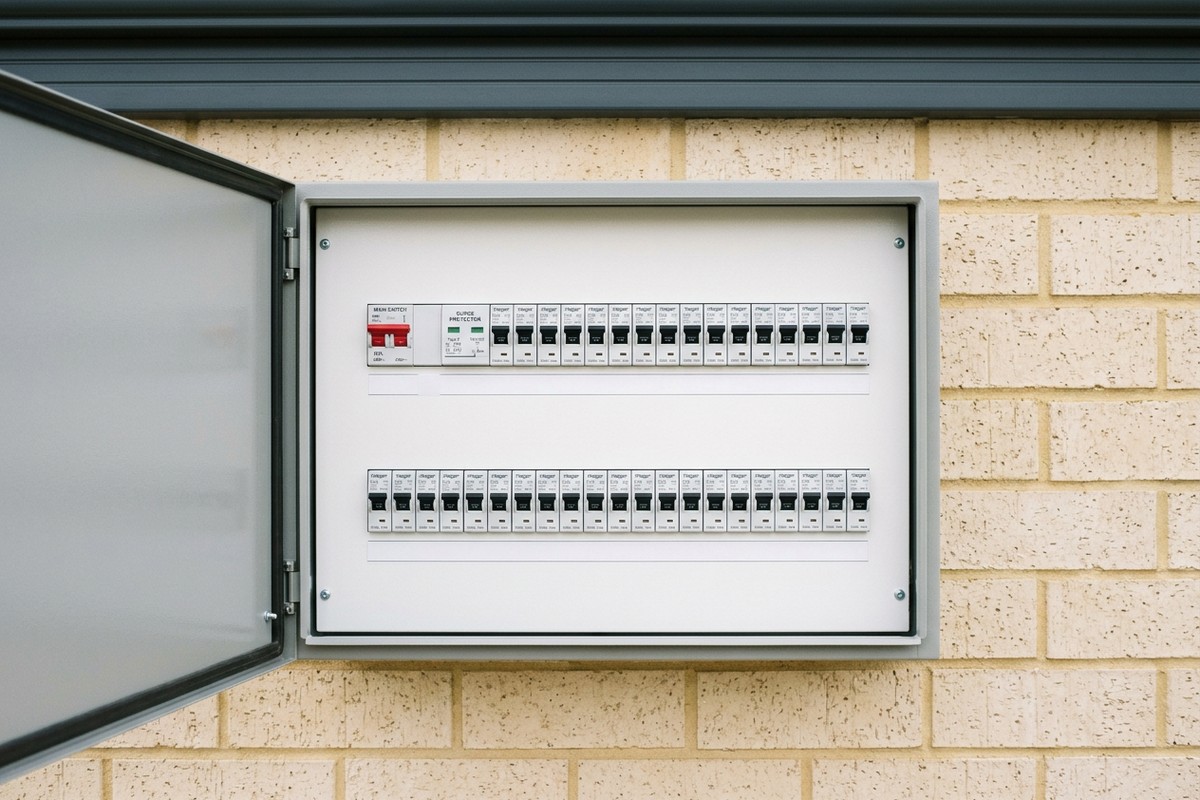
A whole-home surge protector, a surge diverter installed at the switchboard by a licensed electrician, is the first line of defence. It clamps incoming surges from the grid and diverts the excess energy safely to earth before it reaches the home's circuits. Because it sits at the board, it protects everything downstream: hardwired appliances, the oven and air conditioner, lighting, and every outlet in the house.
This is the layer plug-in power-board protectors can't provide. A power-board surge protector only guards what's plugged into it, and only against surges arriving through that outlet, it does nothing for hardwired appliances or surges entering elsewhere. The sensible approach is layered: a surge diverter at the switchboard for whole-home coverage, plus point-of-use protection on the most valuable or sensitive equipment.
When It's Worth It
Surge protection makes the most sense for homes with significant electronics and appliances to protect, and that's most modern homes. It's especially worth considering for a home with a solar system (inverters are expensive and surge-sensitive), a home office full of equipment, a property in an area prone to storms or supply fluctuations, or simply a household that would rather not gamble expensive appliances against a spike. Against the replacement cost of a fried inverter, TV, or fridge control board, a switchboard surge device is modest insurance.
It's not a guarantee against a direct lightning strike, which can overwhelm any protection, but for the far more common everyday surges it's effective and largely invisible once fitted.
Fitting It
A surge diverter is installed in the switchboard, so it's quick work for a licensed electrician and often combined with other switchboard work like an upgrade or adding circuits. The board needs the space and a suitable earth, which the electrician confirms. Once fitted, it works in the background with no input needed, and many devices have an indicator showing they're still active, worth a glance after a major storm.
Signs a Surge May Have Done Damage
Surge damage isn't always dramatic. A direct hit can obviously kill a device outright, but the more common pattern is subtle: electronics that start behaving strangely, reset themselves, or fail earlier than they should. Telltale signs include appliances that randomly switch off or reboot, a buzzing or flickering in equipment that wasn't there before, a faint burnt-electronics smell from a power supply, or several devices on the same area failing in a short space of time. Solar systems can show it as inverter faults or error codes after a storm. None of these definitively prove a surge, but a cluster of them, especially after a storm or a known power event in the area, points that way, and is a reason to consider whole-home protection before the next one does worse.
Frequently Asked Questions
Isn't a power board with surge protection enough?
No. A plug-in surge protector only guards what's plugged into it and only against surges through that outlet. It does nothing for hardwired appliances like the oven, air conditioner, or solar inverter. Whole-home protection comes from a surge diverter at the switchboard.
Do I need surge protection if I have solar?
It's well worth considering. Solar inverters are expensive and sensitive to voltage spikes, and a whole-home surge device at the board helps protect that investment along with the rest of the home's electronics.
Will a surge protector stop lightning damage?
It significantly reduces the risk from the everyday surges and nearby strikes that cause most damage, but no device fully guarantees protection against a direct lightning hit, which can overwhelm any system. For common surges, it's very effective.
Where is a whole-home surge protector installed?
In the switchboard, by a licensed electrician. It needs space in the board and a suitable earth connection, which the electrician checks. It's often fitted at the same time as other switchboard work.
Thinking About Surge Protection for Your Terrigal Home?
Get a free, no-obligation quote from a local licensed electrician serving Terrigal and the Central Coast.