
Solar Panel Installation in Terrigal, Mistakes That Cost Homeowners Later
Why Most Solar Regret Starts Before the Install
Most solar disappointment on the Central Coast doesn't come from the panels failing. It comes from decisions made before the install, the wrong system size, a cheap inverter, or a quote chosen on price alone. Solar is a long-term investment in a home, and the choices made in the first week shape what it delivers for the next fifteen years. The panels themselves are rarely the problem; the planning around them usually is. Knowing where homeowners commonly go wrong is the fastest way to get it right, and none of it requires being an electrician to understand.
Choosing on Headline Price Instead of What's in the Quote
Two solar quotes can show the same number of panels and a similar bottom line yet describe very different systems. The gap usually hides in the components. Panel tier, inverter brand, mounting hardware, cabling, and the workmanship warranty all move the real value of a system, and the cheapest quote often saves money in exactly the places that matter most over time. A budget inverter is the part most likely to need replacing first, so a small saving upfront can become a larger cost a few years on.
A complete quote names the panel and inverter brands, the mounting system, any switchboard work, the grid-connection paperwork, the rebate handling, and the workmanship warranty. A quote that leaves those vague is usually a quote that has cut corners somewhere out of sight. Comparing like for like means reading past the total to the line items, and a reputable installer will happily explain why their quote is built the way it is.
Oversizing, Undersizing, and Ignoring Usage
A system designed without looking at an actual electricity bill is a guess. The right size depends on how much power a household uses and when it uses it, not on a packaged deal. A home that runs most of its load in the evening benefits from a different design to one that runs pool pumps and air conditioning through the middle of the day. Matching the system to real consumption is what turns generation into savings rather than exported surplus sold back cheaply.
Roof orientation feeds into the same decision. North-facing panels produce the most across a full day, but east and west faces capture morning and afternoon sun and can suit a household whose usage peaks at those times. A thoughtful design works with the roof a home actually has and the way the household actually lives, rather than forcing a single template onto every property.
Getting the Accreditation Wrong
This is the mistake that can quietly cost a rebate. Since May 2024, installer accreditation in Australia is held through Solar Accreditation Australia (SAA), not the Clean Energy Council (CEC) as it was previously. The CEC still maintains the approved-product lists for panels and inverters, but the person designing and installing a grid-connected system must hold current SAA accreditation in the right category. Without it, a household can't access Small-scale Technology Certificates (STCs) and the system may not meet grid-connection requirements.
A lot of marketing still references CEC accreditation out of habit, which adds to the confusion. The safe check is simple: ask for an SAA accreditation number and confirm it on the SAA register before signing anything. It takes a few minutes and rules out one of the more expensive ways a solar project can go wrong.
Forgetting About Tomorrow
A solar system installed today often shares a roof with a battery or an EV charger a few years later. Specifying a hybrid inverter at the start, rather than a standard string inverter, means storage can be added later without replacing the inverter. Running a length of conduit toward the garage during the install costs little and saves a great deal if an EV charger follows. These are cheap decisions at design stage and expensive retrofits afterwards, which is why a good installer raises them before the panels go up rather than after.
Frequently Asked Questions
Does a north-facing roof really matter that much?
North-facing panels produce the most over a full day in the Southern Hemisphere, but east and west faces still perform well and can suit a household that uses more power in the morning or evening. A good design works with the roof a home actually has rather than forcing one orientation, and in many cases panels are split across more than one roof face to balance output through the day.
How long does an installation take?
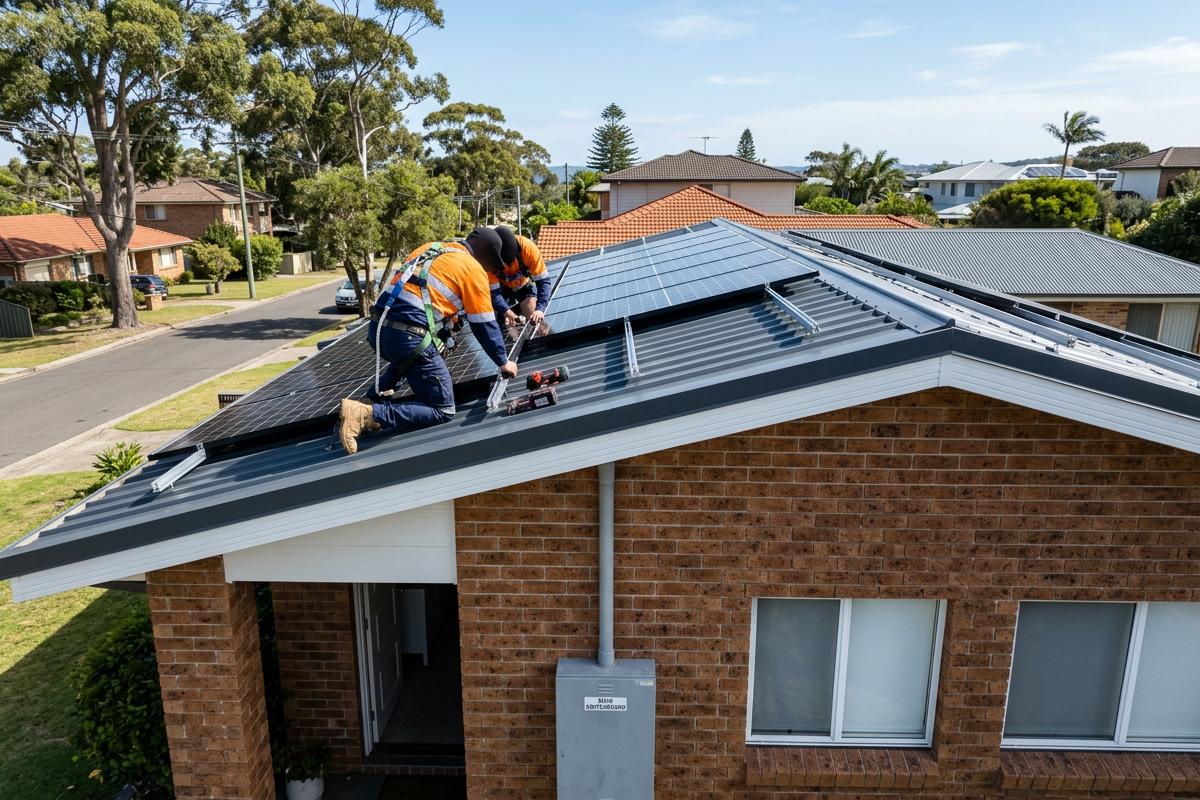
Most standard homes are done in one to two days. Steep roofs, tile roofs, multiple roof faces, or difficult access can add time. The power is only off for a short window during the inverter connection, and the installer will give a realistic timeline at the quoting stage so the day can be planned around.
Do solar panels need much maintenance?
Very little. An occasional rinse to clear dust, pollen, and leaves is usually enough, and the monitoring app flags any drop in output early so it can be checked before it becomes a problem. There are no moving parts in the panels themselves, which is part of why they last so long.
Will panels damage the roof?
Installed with the correct mounting system for the roof type, they shouldn't. A proper site assessment checks the roof's condition first and flags any repairs that are better done before panels go on. The mounting hardware is designed to be weatherproof, and on a tile roof the right tile hooks preserve the roof's integrity rather than compromising it.
Thinking About Solar for Your Terrigal Home?
Get a free, no-obligation site assessment from a local licensed electrician serving Terrigal and the Central Coast.