
Home CCTV in Terrigal, Planning a System That Actually Covers Your Property
Coverage Is the Whole Game
A camera pointed at the wrong spot is just an expensive ornament. The value of a home CCTV system comes almost entirely from how it's planned, where the cameras look, how they're powered, and how the footage is stored. Get the plan right and a modest system protects a property well; get it wrong and even premium cameras leave the gaps that matter exposed. The hardware is only as good as the thinking behind where it points, which is why planning matters more than the spec sheet.
Start With Coverage, Not Cameras
Good CCTV planning starts by walking the property and identifying the points worth watching: the front entry and driveway, side access gates, the back door, and any blind spots where someone could approach unseen. Each camera should have a clear job, covering an approach, an entry, or a vulnerable point, rather than being placed wherever is convenient. Overlapping fields of view at key points mean no single blind angle defeats the system, and a camera positioned to capture someone approaching is far more useful than one that only sees them once they've already left.
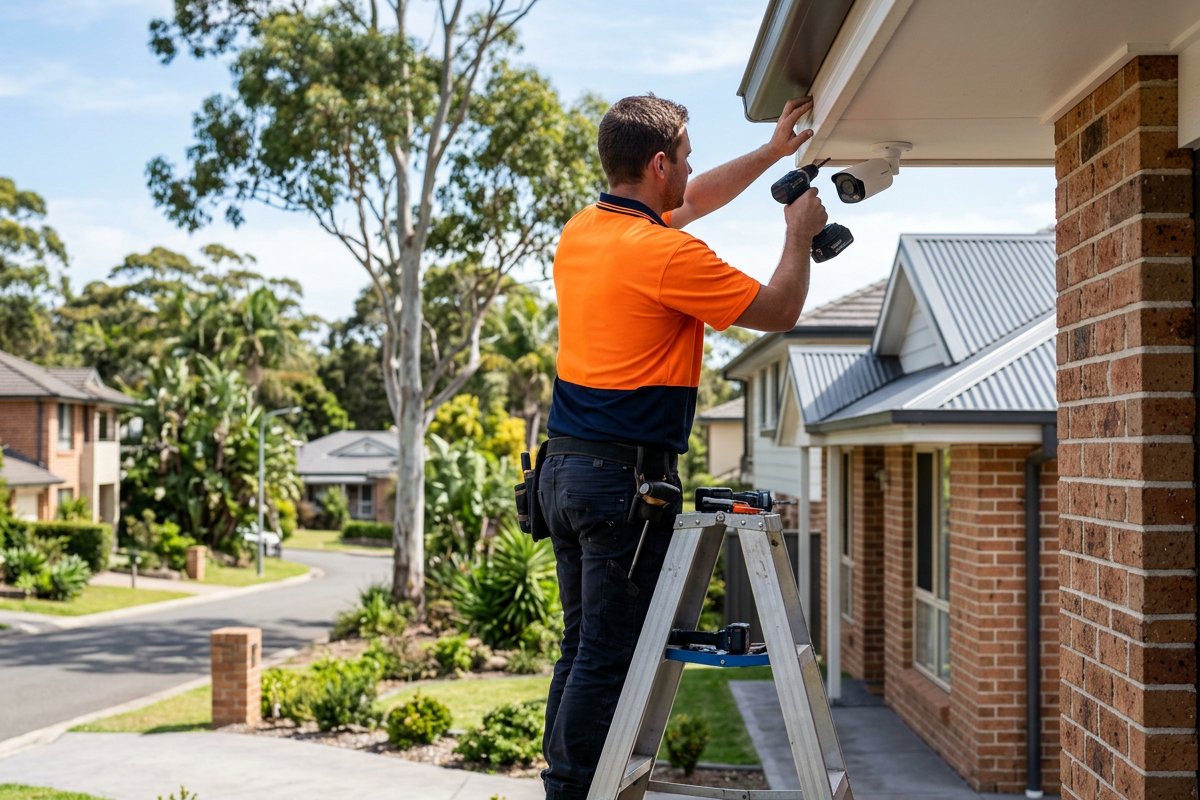
Mounting height and angle matter too. A camera mounted too high looks down on the tops of heads and captures little that identifies anyone; one mounted at a sensible height under an eave, angled across an approach, captures faces and detail. These are the decisions that separate footage that helps from footage that only confirms something happened.
Wired or Wireless
Wireless cameras are quick to put up, but they depend on a stable signal and a power source, and footage can drop out where the signal is weak. Hardwired cameras run a cable back to a central recorder, which gives steady footage and reliable power without batteries to manage or recharge. For a permanent home system, hardwired is the more dependable choice, the cabling is run through the roof space and down in conduit, much like other fixed wiring, so the cameras stay put and stay connected. Wireless has its place for a quick, temporary view, but a system meant to protect a home long term is better hardwired.
Resolution and Night Vision
Resolution determines whether footage is merely a record that something happened or clear enough to make out a face or a number plate. Higher-resolution cameras capture usable detail; lower-resolution ones often only confirm movement. Night performance matters just as much, because a great deal of what a home camera needs to catch happens after dark. Cameras with genuine infrared or low-light capability hold detail at night, where basic units produce little more than vague shapes. It's worth prioritising resolution and night performance on the cameras covering the most important approaches.
Recording and Remote Viewing
Footage has to go somewhere. Most home systems record to a network video recorder (NVR) that stores days or weeks of footage depending on capacity and how it's configured. The system can be set up for remote viewing on a phone, so the property can be checked from anywhere and clips retrieved when needed. How long footage is kept, and whether it's overwritten on a loop once storage fills, is part of the setup decision, a system that only holds two days of footage is little use if a problem isn't noticed until the following week. Matching storage to how often the footage is likely to be reviewed is part of planning the system properly. It is also worth agreeing at the outset how the system will be checked and maintained, confirming the recorder is actually capturing footage, that the time and date stamps are correct, and that the remote app is set up before the installer leaves, so the system is genuinely working rather than simply installed.
Frequently Asked Questions
How many cameras does a typical home need?
It depends on the property's layout and the points worth covering, but most homes are well served by a handful positioned at the main approaches and entries rather than a camera on every wall. The aim is sensible coverage of the points that matter, not blanket surveillance.
Can the cameras be viewed from my phone?
Yes. A properly configured system streams live and recorded footage to an app, so the home can be checked and clips reviewed remotely. This is one of the more useful features of a modern system and is worth setting up at install time.
Is CCTV cabling electrical work?
The low-voltage camera cabling is specialised rather than general electrical work, but running it neatly through roof spaces and walls, and tying it in safely near power, is best handled by a professional as part of the install, so the result is tidy and reliable.
Where should cameras not be pointed?
A well-planned system focuses on the property's own approaches and entries and avoids overlooking neighbouring private spaces. The installer can advise on sensible, considerate placement during the assessment so the system does its job without causing friction with neighbours.
Planning Home Security in Terrigal?
Get a free, no-obligation site assessment from a local licensed electrician serving Terrigal and the Central Coast.