

Safety Switches Explained, Is Your Terrigal Home Properly Protected?
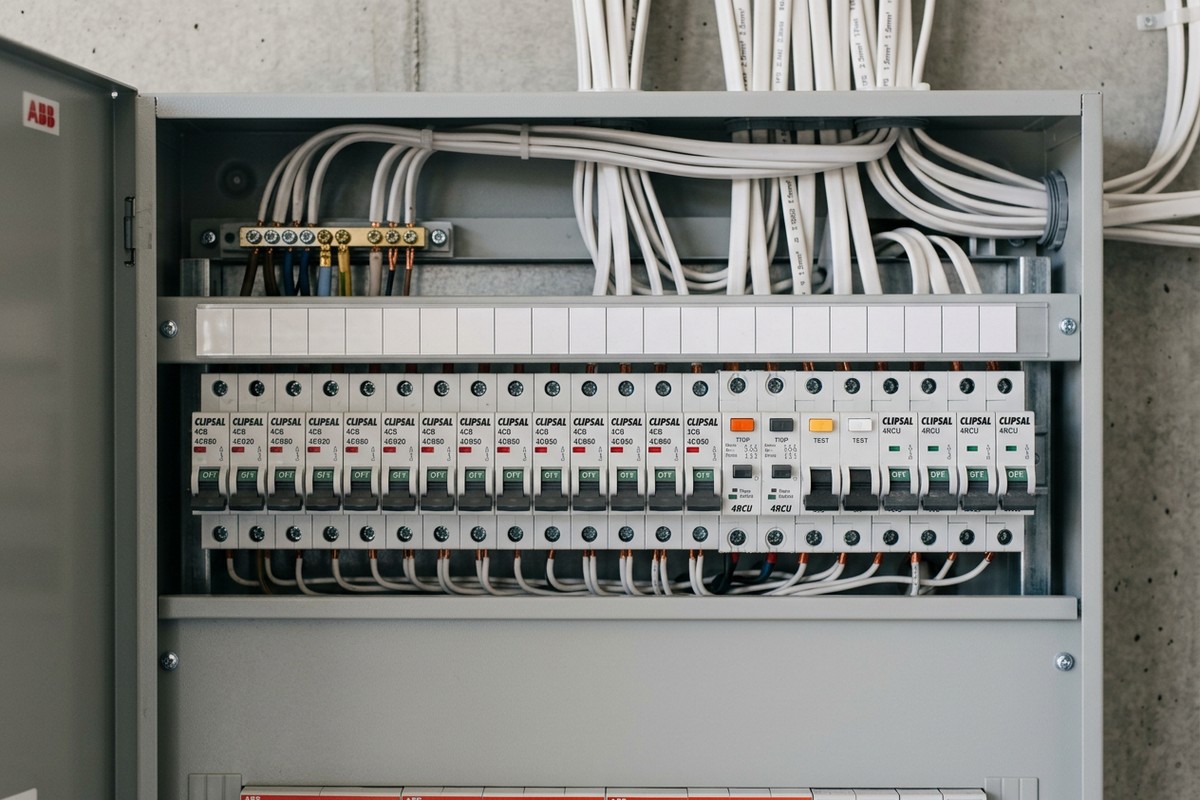
The Device That Protects People, Not Just Wiring
Most people couldn't say what the switches in their switchboard actually do, and there's one distinction worth understanding because it's the difference between protecting the house and protecting the people in it. A safety switch, technically a residual current device, or RCD, is the one that protects people from electric shock. Many Central Coast homes have fewer of them than they should, and some older homes have none at all. Knowing what they do and how to check for them is genuinely worth a few minutes.
Safety Switch vs Circuit Breaker, They're Not the Same
This is the point most homeowners miss. A circuit breaker protects the wiring: it trips when a circuit draws too much current, preventing the cable from overheating. A safety switch (RCD) protects people: it constantly compares the current flowing out to the current flowing back, and if it detects even a small imbalance, current leaking to earth, such as through a person touching a live part, it cuts the power in a fraction of a second, fast enough to prevent a fatal shock.
A board can be full of circuit breakers and still offer no shock protection at all. Modern installations increasingly use RCBOs, which combine both functions in one device per circuit, so each circuit has its own overload and shock protection. The takeaway: having breakers is not the same as having safety switches.
How Much Protection Is Enough
Older homes often had, at best, a single safety switch covering only the power circuits, leaving lighting and other circuits unprotected. Current practice is for safety-switch protection across the circuits in the home, so a fault anywhere triggers protection and only the affected circuit drops out rather than the whole house. Distributing protection per circuit, as RCBOs do, also makes faults far easier to isolate.
For a Terrigal home, the practical questions are: does the board have safety switches at all, how many circuits do they actually cover, and are key areas, kitchen, bathroom, outdoor, and general power, protected. An electrician can answer this in a quick inspection, and the answer often surprises owners of older homes.
Testing the Ones You Have
Safety switches have moving parts and can fail over time, so they need testing. Most have a test button marked "T" on the front; pressing it should trip the switch immediately, confirming it works. The general guidance is to test safety switches every few months and after any electrical storm. If pressing the test button doesn't trip the switch, the device may have failed and should be checked by an electrician, a safety switch that doesn't trip on test won't trip in a real fault either.
When Homes Need More
Several situations prompt adding or upgrading safety-switch protection: an older board with no RCDs, a renovation or new circuit (which triggers a requirement to bring affected circuits up to current standards), or simply wanting modern protection in a home that's never had it. In a very old ceramic-fuse board, retrofitting RCD protection often isn't practical, and a switchboard upgrade is the cleaner route. An electrician advises which path suits the existing board.
When a Safety Switch Keeps Tripping
A safety switch that trips repeatedly is doing its job, it's detecting a leakage fault somewhere, but it's also a sign something needs attention rather than just resetting. The usual causes are a faulty appliance leaking current to earth, moisture in an outdoor circuit or fitting, or a deteriorating section of wiring. Coastal homes see the moisture version often, where rain finds its way into an outdoor outlet or an older light fitting. The way to track it down is methodical: unplug everything on the affected circuit, reset the switch, and reintroduce appliances one at a time until the culprit shows itself. If the switch trips with nothing plugged in, the fault is in the wiring or a hardwired fitting, and that's a job for a licensed electrician to test and locate. Repeatedly resetting a tripping safety switch without finding the cause is the one thing not to do.
Frequently Asked Questions
How do I know if my home has safety switches?
Open the switchboard and look for devices with a small "T" (test) button, those are safety switches or combined RCBOs. Plain circuit breakers won't have a test button. If you're unsure, or there are none, an electrician can confirm what protection the board actually provides.
How often should I test a safety switch?
Pressing the test button every three months or so, and after any electrical storm, is the common recommendation. The switch should trip immediately when tested; if it doesn't, have it checked, because a switch that won't trip on test offers no real protection.
Is a safety switch required by law?
Current Australian standards require safety-switch protection in new installations and on circuits affected by renovations or additions. Many older homes predate those requirements and have limited or no RCD protection, which is worth addressing for safety regardless.
Can I add safety switches to my existing switchboard?
Often, yes, an electrician can add RCD protection to a board that has the space and a suitable configuration. On very old ceramic-fuse boards it's usually not practical, and a switchboard upgrade is the better solution. An inspection determines which applies.
Not Sure Your Terrigal Home Is Properly Protected?
Get a free, no-obligation switchboard check from a local licensed electrician serving Terrigal and the Central Coast.