

Pool and Spa Electrical Safety for Terrigal Homes
Where Water and Electricity Meet
A pool or spa is one of the best parts of a Central Coast summer, and also one of the few places at home where water and mains electricity come close together. That combination demands respect: the rules around pool and spa electrical work are stricter than for general areas precisely because the risk is higher. For Terrigal homeowners with a pool, spa, or plans for one, understanding where the electrical safety lines sit is worth the time, it's the part of pool ownership that doesn't forgive shortcuts.
Why the Rules Are Stricter Around Water
Water conducts electricity, and a wet body has far less resistance to electric shock than a dry one. A fault that might give a harmless tingle in a dry kitchen can be lethal near a pool. That's why the wiring standards define safety zones around pools and spas, dictating what electrical equipment can be installed where, how far fittings must sit from the water, and the protection every pool circuit must have. These aren't arbitrary, they exist because pool-area electrical faults have caused deaths.
All pool and spa electrical circuits must have safety-switch (RCD) protection, and equipment near the water has to be appropriately rated and positioned outside the defined danger zones. This is firmly licensed-electrician territory, not a job for general handywork.
The Equipment That Needs an Electrician
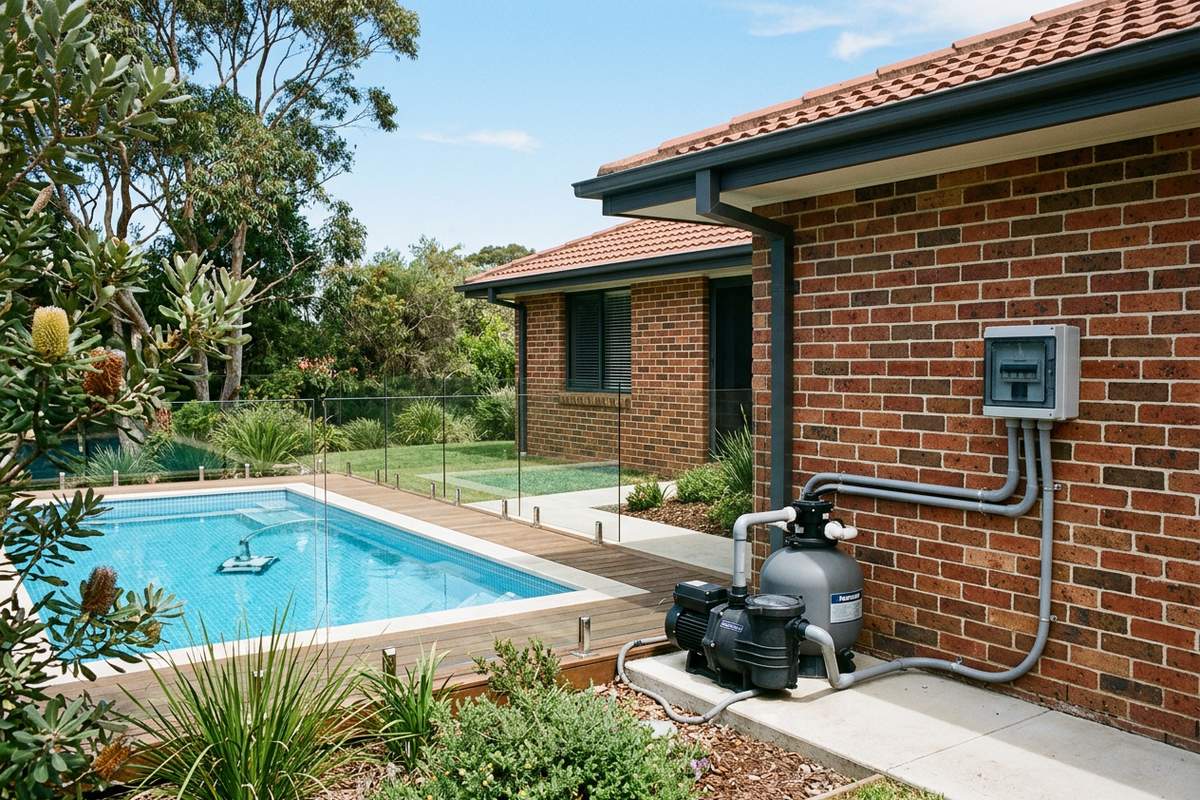
Pool and spa setups involve several electrical components: the pump and filtration, chlorinators and salt-water systems, pool and spa heating, underwater and area lighting, and increasingly automation and remote control. Each of these has to be wired on protected circuits, with the right cabling for an outdoor, wet environment, and bonded and earthed correctly. Pool lighting in particular is specialised, underwater lights run on extra-low voltage through an isolating transformer, kept well clear of the mains side.
Spas, including plug-in portable spas, deserve a mention because owners often assume "plug-in" means safe to run off any outlet. A spa draws significant sustained current and should run from a suitable, RCD-protected outlet on an adequate circuit, not a general outlet shared with other loads or fed by an extension lead.
Existing Pools Worth Checking
Many Central Coast homes have pools installed years or decades ago, and standards have tightened since. An older pool may have equipment on circuits without modern RCD protection, lighting that predates current rules, or cabling that's weathered in the coastal environment. Salt air is hard on outdoor electrical fittings, corroding terminals and enclosures over time. A periodic check of the pool's electrical equipment by a licensed electrician catches deterioration before it becomes a hazard, particularly worthwhile before each swimming season.
The Homeowner's Part
Beyond the wiring, a few habits keep a pool area safe: keeping electrical appliances (radios, chargers, lights on leads) away from the water, not handling pool equipment with wet hands, testing the RCDs protecting pool circuits regularly, and getting any tingle, trip, or fault near the pool checked immediately rather than living with it. If anyone ever feels even a faint shock in or near the water, the pool should be cleared and the system checked before it's used again, that sensation is a warning that must not be ignored.
Bonding: The Safety Layer You Don't See
One of the most important pool safety measures is also the least visible: equipotential bonding. In simple terms, the metal parts in and around a pool, reinforcement, ladders, rails, and fixed metal equipment, are electrically connected together and to earth, so they all sit at the same electrical potential. That prevents a dangerous voltage difference building up between, say, a metal handrail and the water, which is the kind of hidden fault that can cause a shock without any obvious cause. Bonding is built in when a pool is installed to current standards, but older pools may predate the requirement or have had it compromised by corrosion or alterations. It's not something a homeowner can see or check, which is exactly why a licensed electrician's inspection of an established pool is worthwhile, they verify the bonding is intact along with the rest of the system.
Frequently Asked Questions
Can I wire my own pool pump or lighting?
No. Pool and spa electrical work falls under the strictest part of the wiring rules because of the water hazard, and must be done by a licensed electrician. This includes pumps, lighting, heating, and the circuits feeding them.
Does my pool need a safety switch?
Yes. All pool and spa circuits must have RCD (safety switch) protection. If your pool was installed some time ago, it's worth confirming the protection is in place and working, as standards have tightened over the years.
Are plug-in spas safe to run from any power point?
Not necessarily. A spa draws significant sustained current and should run from a suitable, RCD-protected outlet on an adequate circuit, not a shared general outlet or an extension lead. An electrician can confirm the supply is right.
How does coastal salt air affect pool electrics?
Salt air corrodes outdoor electrical fittings, terminals, and enclosures over time, which is more aggressive near the coast. A periodic inspection of pool electrical equipment catches corrosion and deterioration before it becomes a safety problem, ideally before each swimming season.
Want Your Terrigal Pool Electrics Checked?
Get a free, no-obligation assessment from a local licensed electrician serving Terrigal and the Central Coast.