

New Home Wiring in Terrigal, The Electrical Decisions to Make Before the Build Starts
The One Chance to Get It Right Cheaply
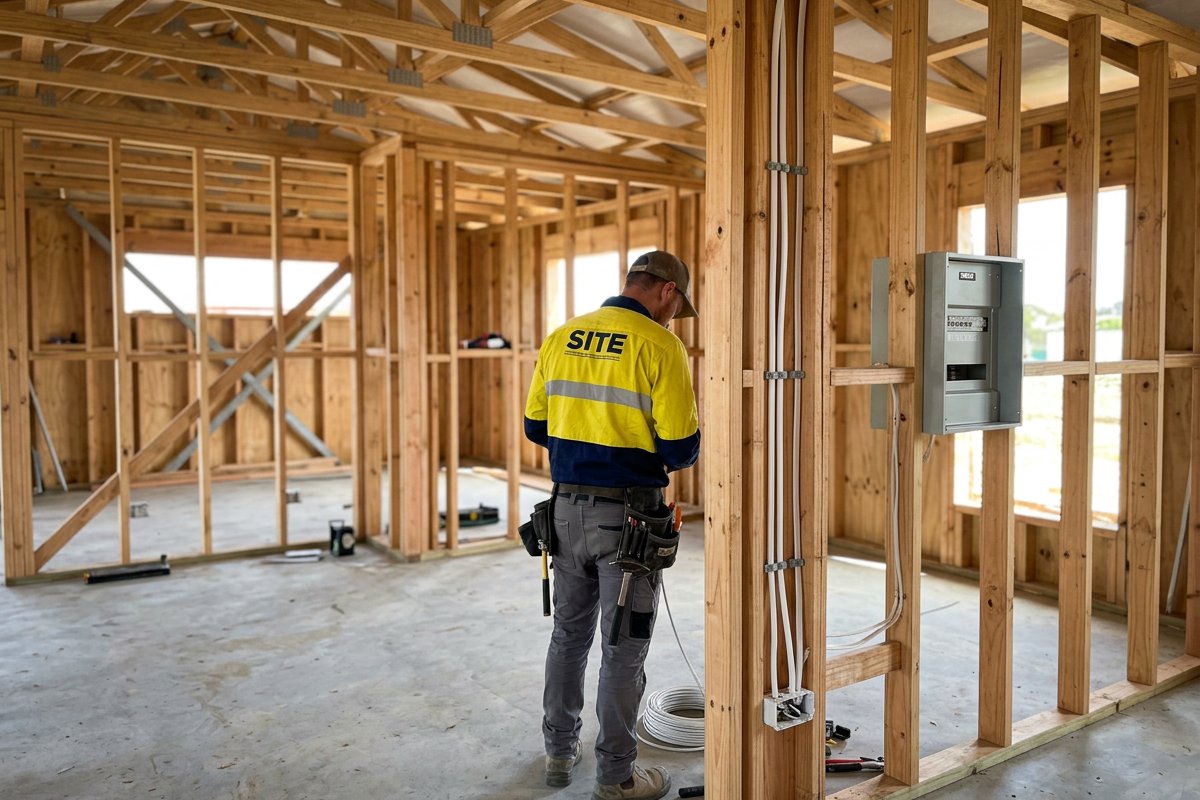
Standing in the frame of a half-built house is the worst time to realise a powerpoint is in the wrong place. Once the plasterboard goes on, moving a point or adding a circuit means cutting walls open, so the decisions made at the planning stage, before rough-in, are the ones that determine how well a new home works to live in. A new build is the single best opportunity to get the electrical layout right at low cost, because the walls are open and the cabling can go anywhere. It rewards thinking ahead, and it punishes leaving the electrical plan to the standard inclusions.
Plan Around How the Rooms Will Be Used
Builders work to a standard electrical plan unless told otherwise, and standard rarely matches how a specific family lives. Walking through the plans room by room, where the bed will sit, which wall the TV goes on, where a desk or a kettle or a phone charger will live, surfaces the points and switches that a standard layout misses. It costs almost nothing to add a few extra outlets during rough-in and a great deal to chase them into finished walls later.
The same thinking applies to the outdoors and the garage. Power for an alfresco area, the driveway, a shed, or a future pool is far cheaper to provision while trenching and framing are happening than to retrofit once the landscaping is in. A few minutes spent imagining daily life in each space pays off for years.
Lighting Is a Design Decision, Not an Afterthought
Lighting shapes how a home feels, and it's far easier to plan before the ceiling is closed. Deciding on downlight placement, separate switching for different zones, dimming where it's wanted, and any feature or task lighting at the planning stage means the cabling is run once, in the right places. Two-way switching on hallways and stairs, a well-placed switch by the bed, and task lighting over a kitchen bench are the small touches that are obvious to plan now and awkward to add later. Retrofitting a missed light or a second switch after handover is a far bigger job than marking it on the plan.
Run the Cables You'll Want Later
Some of the most valuable decisions in a new build are about what to provision for, not just what to install now. Running data cabling to the study, the living room, and key bedrooms while the walls are open gives a home a reliable wired network that WiFi alone can't match. Pulling a conduit toward the garage leaves an easy path for a future EV charger. Allowing switchboard space and capacity for solar and a battery avoids a board upgrade down the track. None of these cost much during construction; all of them are expensive afterwards, and most homeowners only realise they wanted them once it's too late to add them cheaply.
Compliance and Coordinating With the Build
New homes must be wired to the current AS/NZS 3000 wiring rules, which cover everything from circuit protection to the mandatory interconnected smoke alarms required in NSW. A licensed electrician handles the rough-in (cabling run through the open frame), the fit-off (fitting the points, switches, and fittings once the walls are finished), and the final testing and certification.
Timing matters as much as the work itself. The electrician's rough-in has to land after the frame is up but before the insulation and plasterboard go in, and the fit-off comes near the end once the walls are painted. Coordinating those stages with the builder's schedule keeps the project moving and avoids the delays that come from an electrician being called in at the wrong moment.
Frequently Asked Questions
When should the electrician get involved in a new build?
At the planning stage, before rough-in and ideally before the plans are finalised. Early input is when layout and future-proofing decisions are cheap to act on, and it gives the electrician time to flag anything the standard plan misses.
What's the difference between rough-in and fit-off?
Rough-in is running the cabling through the open frame before the walls are lined. Fit-off is installing the points, switches, lights, and switchboard once the walls are finished. They happen at different stages of the build, which is why the electrician visits more than once.
Are interconnected smoke alarms required in a new home?
Yes. NSW requires compliant smoke alarms in new residential builds, and interconnected alarms, where one triggering sets off the rest, are the current standard. The electrician installs these as part of the wiring, positioned to meet the regulations.
Can extra points and data be added after the house is finished?
They can, but it means opening walls or running surface conduit, which is more disruptive and more costly than provisioning during construction. Planning ahead is far cheaper, which is why the time spent on the electrical plan before the build is worth it.
Building a New Home in Terrigal?
Get a free, no-obligation site assessment from a local licensed electrician serving Terrigal and the Central Coast.