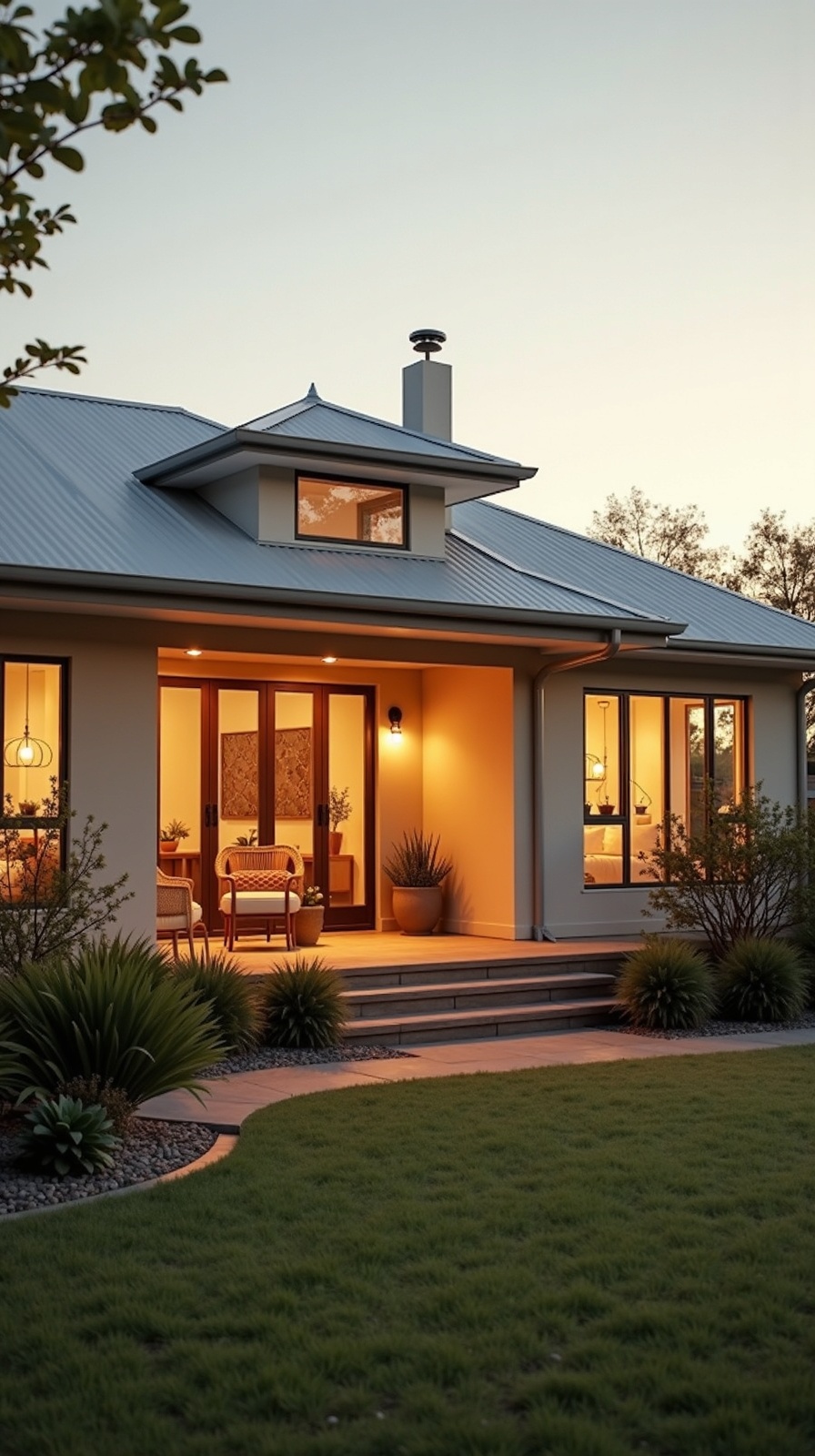

LED Downlight Installation in Terrigal, Planning a Layout That Works
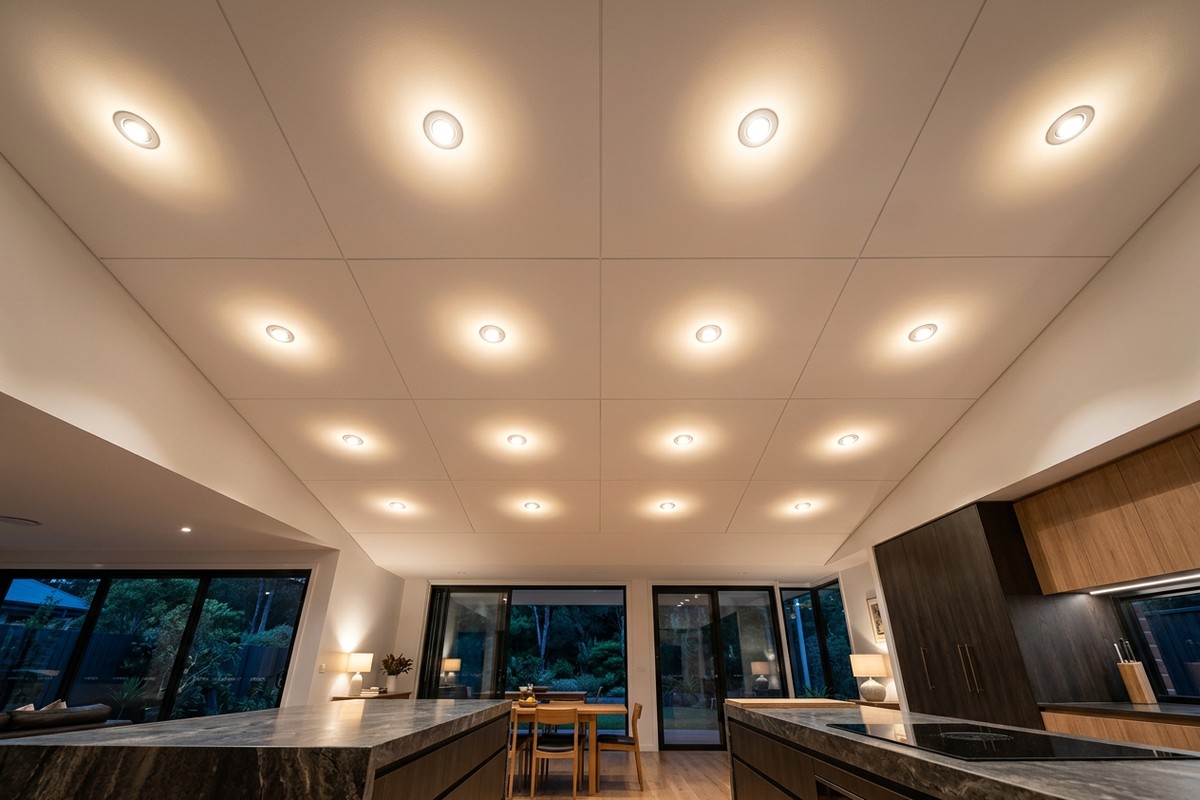
The Most Common Downlight Mistake
The single most common lighting mistake in Central Coast homes is treating downlights as a grid to fill rather than a layout to plan. Someone counts the ceiling, spaces a dozen identical downlights evenly, and ends up with a room that's either floodlit like an office or oddly patchy, bright in the middle of the floor and dim where people actually sit and work. Good downlighting starts with what each part of the room is for, not with even spacing. Getting it right is mostly planning, and the planning costs nothing.
Start With Tasks and Zones, Not a Grid
Every room has zones that need different light: the kitchen bench needs strong, even task light; the lounge wants softer, layered light; a hallway just needs safe, comfortable passage. Mapping those zones first tells you where light is actually needed. Downlights then go where they do work, over the bench, the island, the reading chair, rather than marching across the ceiling in a pattern that ignores the furniture.
Spacing follows from ceiling height. As a rough rule, downlights sit a sensible distance apart and in from the walls so the light overlaps gently without leaving dark gaps or hot spots. Too far apart leaves scallops of shadow; too close wastes fittings and energy and flattens the room. An electrician planning the layout works to the room's dimensions and the beam angle of the chosen fitting rather than a one-size grid.
Beam Angle and Colour Temperature
Two specs do most of the work in how a room feels. Beam angle controls the spread: a wider beam washes a general area, a narrower beam concentrates light on a feature or bench. Mixing the two, wide for general cover, narrow to highlight, is how a layout gains depth instead of flat uniformity.
Colour temperature sets the mood. Warm white (around 2700-3000K) suits bedrooms and living areas and reads as comfortable and homely; neutral white (around 4000K) suits kitchens, bathrooms, laundries and work areas where crisp, clear light helps. Lighting a whole house in a single cool temperature is a common regret, it makes living spaces feel clinical. Many modern downlights are switchable between temperatures, which lets a layout match each room without stocking different fittings.
Dimming and Switching
Dimmable downlights transform how flexible a room is, full light for cleaning or cooking, low light for relaxing. The catch is that the dimmer has to be compatible with the LED driver, or the lights flicker, buzz, or won't dim smoothly at the low end. This is a frequent complaint after a DIY globe swap, and it's exactly the kind of pairing a licensed electrician gets right by matching the dimmer to the fittings.
Switching also deserves thought at the planning stage. Splitting a room's downlights across two or more switches lets you light just the part of the room you're using, rather than all or nothing. It costs little to wire when the ceiling is open and is awkward to add later.
Replacing Old Downlights and Halogens
Many Terrigal homes still run old halogen downlights, which burn hot, use far more power, and have been linked to ceiling-insulation fire risk where they weren't installed with proper clearances. Swapping them for modern LED fittings cuts running cost and heat dramatically and removes that risk. Because the cut-out sizes and fittings differ, and because the old transformers often need removing, this is work for a licensed electrician rather than a globe-for-globe swap.
Bathrooms, Outdoors and Special Areas
Not every downlight is suited to every spot. Bathrooms, laundries, and any area exposed to moisture need fittings with an appropriate IP (ingress protection) rating, and the wiring rules restrict what can go directly above a shower or bath. Using a standard indoor downlight in a wet zone is both a compliance breach and a genuine hazard. Eave and outdoor downlights are a separate category again, rated for weather and, near the coast, chosen for corrosion resistance. Insulation-contact (IC-rated) fittings matter too, modern LED downlights are generally safe to be covered by ceiling insulation, where the old halogens needed a clear gap. An electrician matches the fitting to the location so the layout is safe as well as good-looking.
Frequently Asked Questions
How many downlights does a room need?
It depends on the room's size, ceiling height, and what the space is used for, not a fixed number per square metre. A well-planned layout places lights where tasks happen and uses the right beam angle, which often means fewer, better-positioned fittings than a full even grid.
What colour temperature is best for a home?
Warm white (around 2700-3000K) suits living areas and bedrooms; neutral white (around 4000K) suits kitchens, bathrooms and work areas. Many homes use both, and switchable fittings let you set the temperature room by room.
Why do my LED downlights flicker when dimmed?
Usually because the dimmer isn't matched to the LED driver. LEDs need a compatible dimmer; an old dimmer left over from halogen days often causes flicker or buzzing. Matching the dimmer to the fittings fixes it.
Is replacing halogen downlights with LED worth it?
Yes. LEDs use a fraction of the power, run far cooler, and last much longer, and swapping out old halogens removes the heat and fire-clearance concerns those older fittings carried. The reduction in running cost and heat is usually noticeable straight away.
Planning Downlights for Your Terrigal Home?
Get a free, no-obligation quote from a local licensed electrician serving Terrigal and the Central Coast.