

Flickering Lights, Warm Outlets and Buzzing, Electrical Warning Signs in Terrigal Homes
Your Home Is Trying to Tell You Something
Electrical faults rarely announce themselves all at once. More often a home gives quiet warnings for weeks or months, a flicker here, a warm switch there, that are easy to dismiss until they become a real problem. Learning to read those signals is genuinely useful, because catching a fault early is the difference between a simple repair and a serious hazard. This is a plain-language decoder for the warning signs Terrigal homeowners most commonly notice, what each tends to mean, and how urgently to act.
Flickering or Dimming Lights
A single flickering light is often just a loose globe or a failing fitting, minor. But lights that flicker or dim across multiple rooms, or dim noticeably when an appliance like the kettle or air conditioner switches on, point to something more: a loose connection somewhere in the circuit, an overloaded circuit, or a deteriorating connection at the switchboard. Widespread or load-related flickering is worth having checked, because loose connections generate heat, and heat is how electrical fires start.
Warm or Discoloured Switches and Outlets
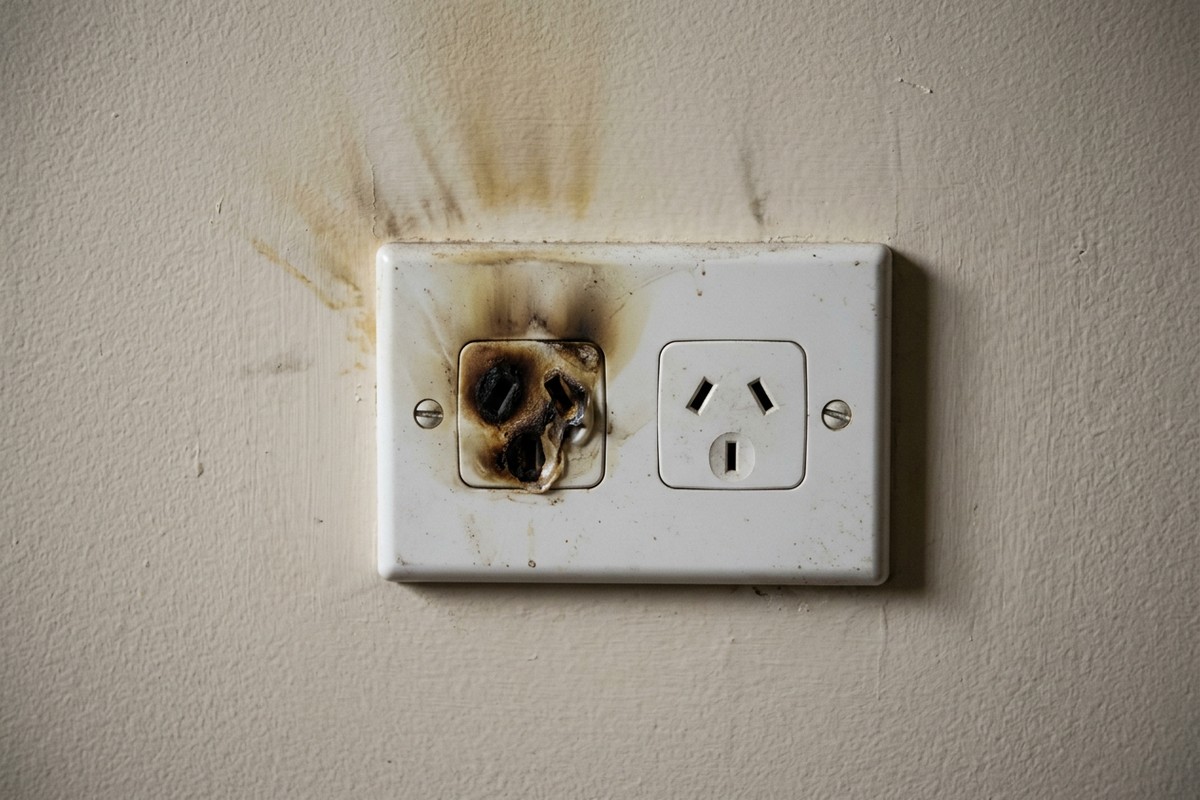
A power point or switch should never be warm to the touch. Warmth, browning or discolouration around an outlet, or a faint scorched look are signs of a loose or failing connection generating heat behind the wall. This one warrants prompt attention, stop using the outlet and have it inspected, because it's a recognised precursor to an electrical fire. The same applies to a plug that's hot when you unplug it.
Buzzing, Crackling or Burning Smells
Electricity should be silent and odourless. A buzzing or crackling sound from a switch, outlet, or the switchboard suggests arcing, current jumping a gap it shouldn't, which is a serious fault. A burning or fishy, melting-plastic smell near electrical fittings is among the most urgent signs there is: it indicates components overheating. If you notice either, stop using the affected circuit, switch it off at the board if you can identify it safely, and call a licensed electrician promptly rather than waiting to see if it worsens.
Tripping, Shocks and Old Outlets
A safety switch that trips occasionally is doing its job; one that trips repeatedly signals a fault to be located rather than reset away. Any tingle or shock from an appliance, switch, or, especially, anything near water is a clear warning that must not be ignored. And ongoing signs of an ageing system, such as two-pin outlets, a fuse board with ceramic fuses, or frequently blown fuses, indicate an installation that's working harder than it was built for and is worth assessing before a fault forces the issue.
How Urgent Is Each Sign?
As a rough guide: a burning smell, buzzing or crackling, warm or discoloured outlets, and any shock are act-now signs, stop using the circuit and get an electrician. Widespread flickering, repeated tripping, and load-related dimming are act-soon signs worth booking an inspection for. Isolated single-fitting flicker is usually minor. When in doubt, the safe move is always to have it checked, diagnosing electrical faults is exactly what a licensed electrician does, and it's far cheaper than the alternative.
What Not to Do
Two reactions to electrical warning signs cause the most trouble. The first is ignoring them, assuming a flicker or a warm switch will sort itself out. Electrical faults don't heal; they progress, and the cheap early fix becomes an expensive or dangerous one. The second is attempting a DIY repair. Opening up a switch, outlet, or the switchboard to investigate is both illegal for unlicensed people in NSW and genuinely dangerous, since the fault you're chasing is exactly what makes the work hazardous. The safe response to any of the act-now signs is the same: stop using the affected circuit, isolate it at the switchboard if you can do so safely, and call a licensed electrician. Resist the urge to keep resetting a tripping safety switch or to keep using a warm outlet "for now", those are the habits that turn a warning into an incident.
Frequently Asked Questions
Why do my lights flicker when an appliance turns on?
It usually means the circuit is heavily loaded or there's a loose or deteriorating connection that struggles when demand spikes. Occasional minor flicker can be trivial, but regular dimming when appliances start is worth having an electrician check, as loose connections generate heat.
Is a warm power point dangerous?
It can be. A power point or switch that's warm, discoloured, or scorched-looking usually means a loose connection generating heat behind the wall, a known fire precursor. Stop using it and have it inspected promptly rather than continuing to use it.
What should I do if I smell burning near an outlet?
Treat it as urgent. Stop using anything on that circuit, switch it off at the switchboard if you can safely identify it, and call a licensed electrician. A burning or melting-plastic smell near electrical fittings indicates overheating components and shouldn't be left.
Is it normal for a safety switch to trip sometimes?
An occasional trip is the switch doing its job in response to a fault, often a specific appliance. Repeated tripping is a sign of a fault that needs locating rather than just resetting. If it trips with everything unplugged, the issue is in the wiring or a hardwired fitting and needs an electrician.
Noticing Warning Signs in Your Terrigal Home?
Get a free, no-obligation assessment from a local licensed electrician serving Terrigal and the Central Coast.