

Ceiling Fan Installation in Terrigal, Choosing and Positioning Them Right
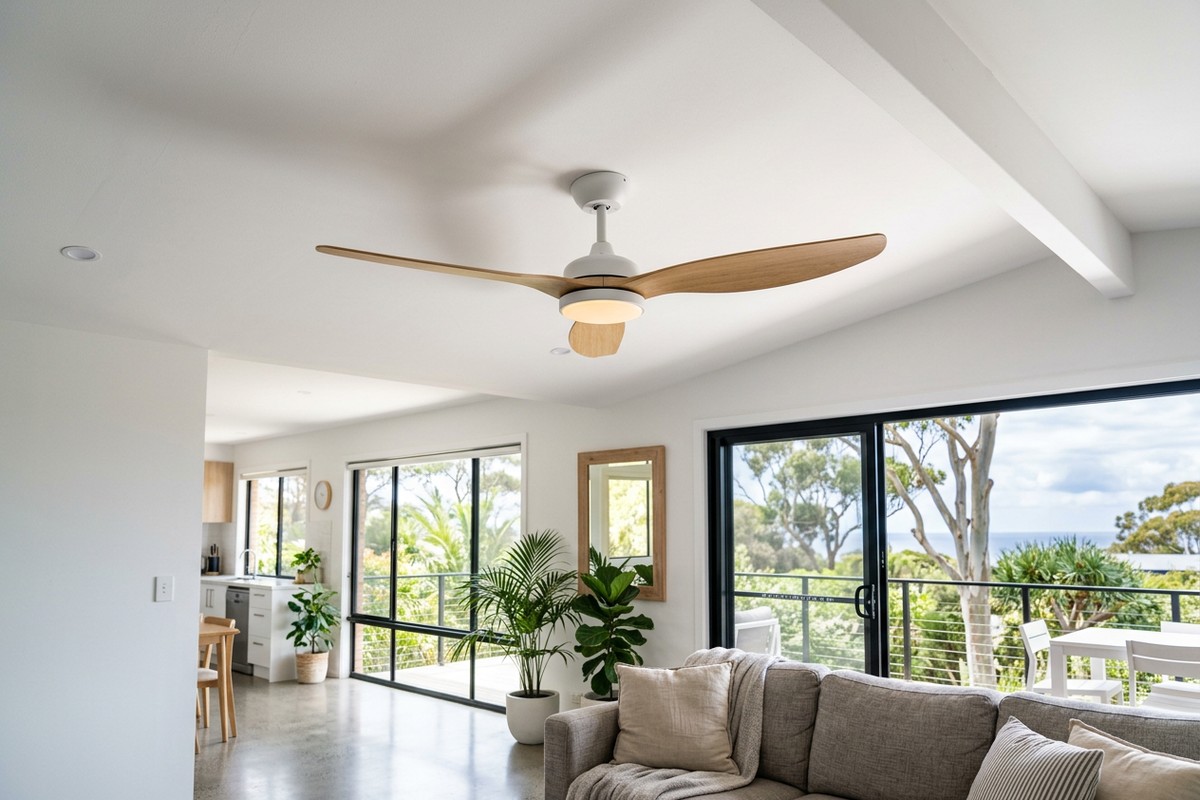
Why a Ceiling Fan Is More Than an Off-the-Shelf Job
On the Central Coast, where humid summers and coastal breezes are part of life, a ceiling fan does real work, it makes a room feel several degrees cooler and takes load off the air conditioner. But a fan only delivers that if it's the right size, hung at the right height, and wired properly. Plenty of Terrigal homeowners buy a fan on looks alone, then wonder why the bedroom still feels stuffy or the blades wobble. Getting the choice and the install right is what separates a fan that earns its keep from one that just spins.
Sizing the Fan to the Room
Fan effectiveness comes down to blade span versus room size. A fan that's too small for a large living area moves air weakly no matter how fast it runs; one that's too big for a small bedroom feels overpowering. As a rough guide, small rooms suit a fan around the 1200mm span, average bedrooms and studies a 1300mm span, and larger living areas a 1400mm or wider span. Rooms longer than about six metres often do better with two smaller fans than one large one, spreading airflow evenly rather than leaving still corners.
Blade count and motor type matter less than people expect for airflow, but they affect noise and running cost. DC-motor fans are quieter, use less power, and usually come with more speed steps and a remote, which is why they've become the default choice for bedrooms where noise is a factor.
Getting the Height and Position Right
A fan needs clearance to move air properly and to stay safe. The blades should sit at least 2.1 metres above the floor, and ideally around 2.4 metres for the best airflow. On standard ceilings the fan mounts close to the ceiling; on raked or high ceilings an extension rod drops it to the right working height. The fan should also sit roughly in the centre of the room, clear of walls, light fittings, and the swing of any doors or robe doors.
Outdoor and alfresco fans are a separate category. A fan on a Terrigal patio or veranda has to be rated for outdoor or coastal use, an indoor fan in a salt-air outdoor spot corrodes and fails quickly. The right fan there carries an appropriate IP rating and marine-grade finish.
The Wiring and Switching Decisions
This is where a licensed electrician earns the call-out. Replacing an existing fan on an existing fan point is straightforward, but adding a fan where there wasn't one means running a new circuit and deciding how it's switched. The common options are a wall switch (or a dedicated fan controller on the wall), a remote, or both. Homes increasingly choose a remote for speed and a wall plate that keeps the circuit controllable even if the remote goes missing.
If the fan includes a light, the electrician separates the switching so the fan and light can run independently. Existing ceiling roses and old wiring are checked at the same time, an older fan point may not be rated or earthed to current standards, and that's worth sorting while the ceiling is open rather than later.
Why It's Not a DIY Job
In NSW, connecting a ceiling fan to the mains is electrical work and must be done by a licensed electrician. Beyond the legal side, a fan is a spinning weight mounted overhead, it has to be fixed to a proper ceiling mounting point or a fan-rated brace, not just screwed into plasterboard. A fan that's been hung off an inadequate fixing is the one that develops a wobble and, eventually, a real hazard. A licensed install gets the fixing, the balance, and the wiring right the first time.
Frequently Asked Questions
What size ceiling fan suits a standard bedroom?
For most bedrooms, a fan with a blade span around 1300mm gives good airflow without dominating the room. Larger main bedrooms or living areas usually suit 1400mm or wider, and very large rooms can be better served by two smaller fans than a single big one.
Can a ceiling fan replace air conditioning?
Not entirely, but it reduces how hard the air conditioner has to work. A fan makes a room feel cooler by moving air across the skin, so you can set the air conditioner a couple of degrees higher and still feel comfortable, which cuts running costs over a Central Coast summer.
Do I need a new switch to add a ceiling fan?
It depends on the existing wiring. If there's already a fan point, the fan can often use the existing control; if it's a new location, the electrician runs the wiring and sets up switching to suit, a wall control, a remote, or both, with the light separated if the fan has one.
Can any ceiling fan go outside on a patio?
No. Outdoor and alfresco areas need a fan rated for outdoor or coastal conditions, with the right IP rating and a corrosion-resistant finish. An indoor fan installed outside, especially near the coast, will corrode and fail well before its time.
Want a Ceiling Fan Installed in Terrigal?
Get a free, no-obligation quote from a local licensed electrician serving Terrigal and the Central Coast.